


America Speaks on Mental Health
More than one in five Americans live with a mental health condition, and nearly half will experience one at some point in their lifetime. These conditions — including anxiety disorders, mood disorders, and substance use disorders — affect individuals, families, workplaces, and communities across the country. In recognition of Mental Health Month this May, we are taking a closer look at how Americans viewed the importance of mental health in our 2026 national survey commissioned earlier this year.
For more than 30 years, Research!America has commissioned annual public opinion surveys to better understand Americans’ views on medical, health, and scientific research, as well as other pressing issues related to public health, research, and innovation. Our 2026 national survey released in January provides insights into the most important health and research-relevant issues for Americans.
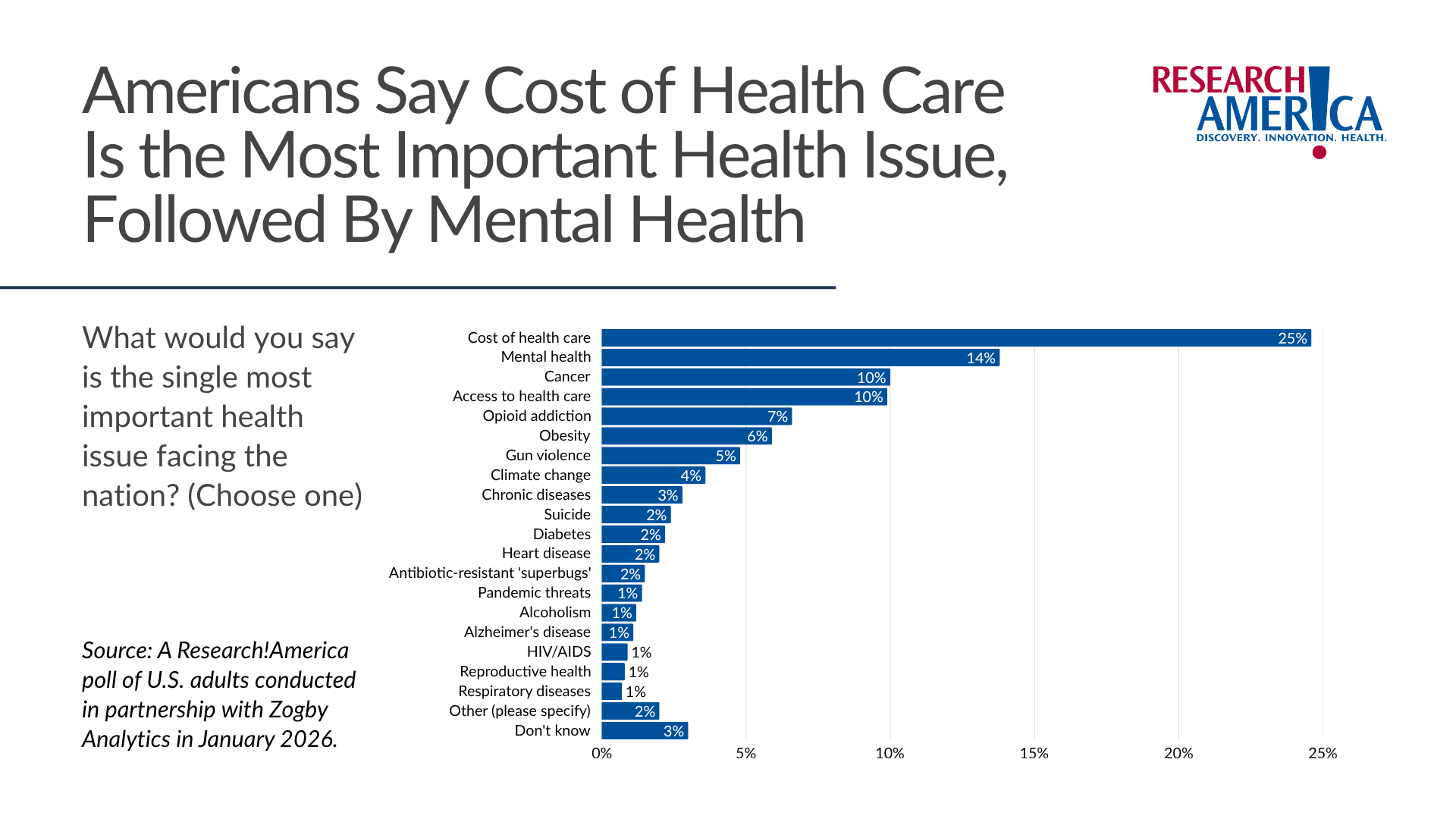
Each year we ask, “What would you say is the single most important health issue facing the nation?” This year the top answer was the cost of health care, selected by a quarter (25%) of respondents, up nine points from 2025. The second most-selected answer was mental health, picked by 14% of respondents, and up 2 points from 2025 (see below).
Mental health as the most important health issue over the last decade
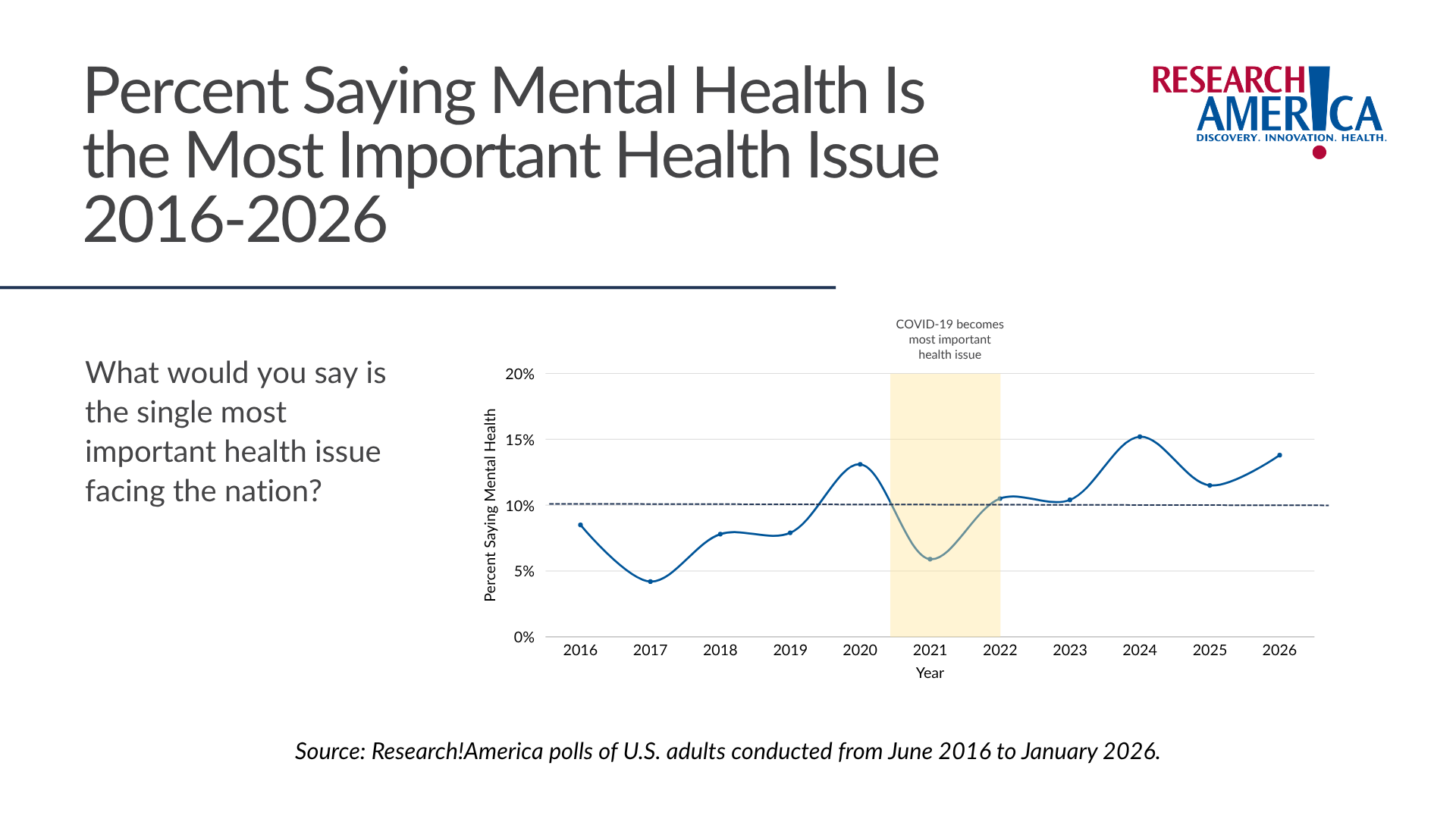
This question has been a mainstay in our national survey for more than 10 years. We started seeing more than 10% of Americans choose mental health as the single most important health issue (13.1%) in January of 2020 – just before the COVID-19 pandemic hit the U.S. But in 2021, as the pandemic took hold, that number dipped to just 6% when (understandably), the majority of Americans said COVID-19 was the single most important health issue. In 2022, the percentage of Americans choosing mental health rose back above 10% and has stayed above 10% ever since.
 Racial differences
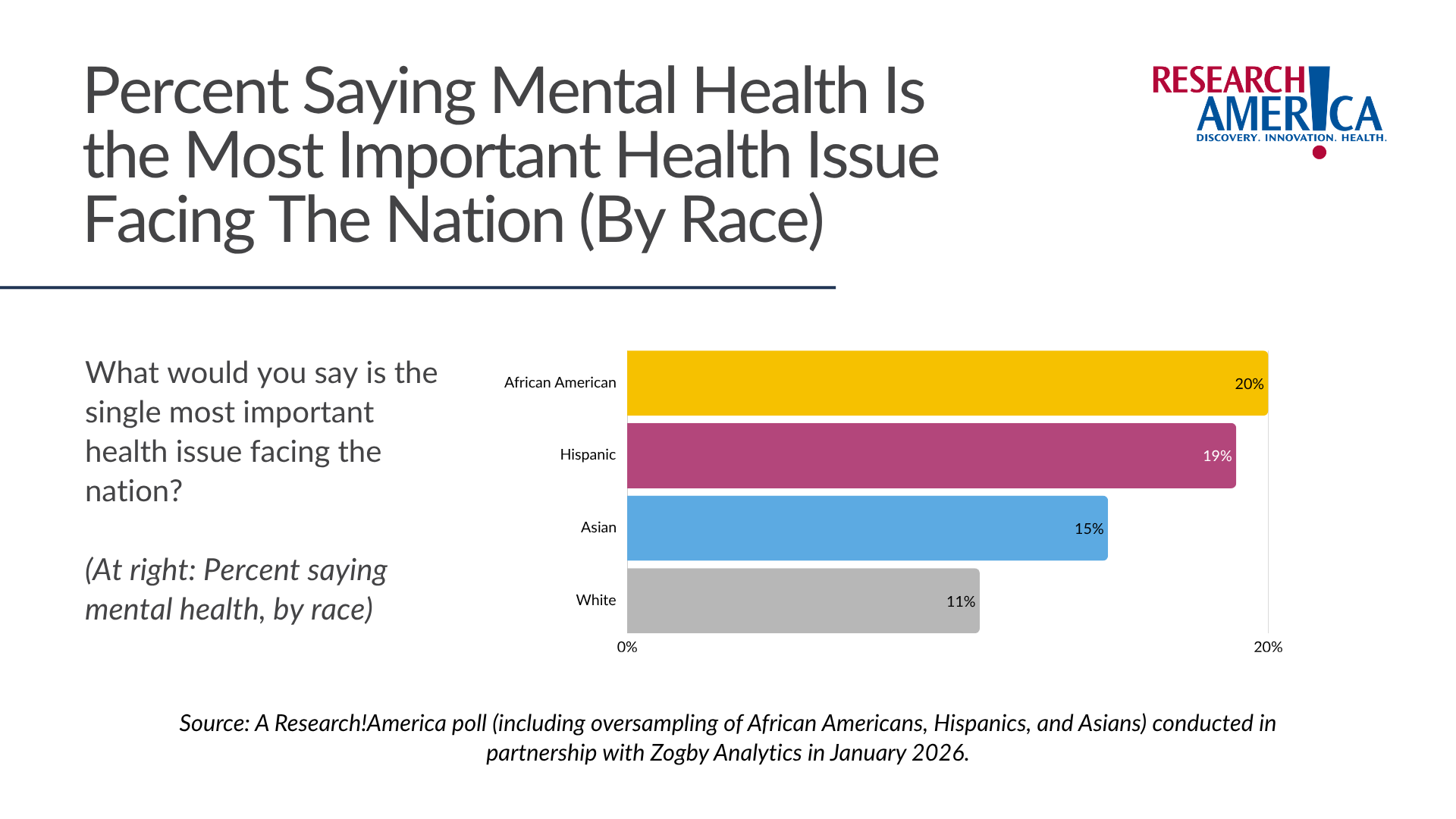
In 2026, as noted above, 14% of Americans in our national sample said mental health was the single most important issue. However, when broken down by race, certain racial groups were more likely to select mental health as the single most important health issue than others. Only 11% of white respondents chose mental health, compared to 20% of African American respondents, 19% of Hispanic respondents, and 15% of Asian respondents.
To accurately represent the opinions of African American, Hispanic Americans, and Asian Americans, our 2026 national survey included an oversample.
What is an oversample?
An oversample is a research method where additional respondents from specific populations are included so that their views can be examined with greater statistical confidence. For this survey, in addition to our national sample, we oversampled 404 African American respondents, 403 Hispanic respondents, and 403 Asian respondents. These larger sample sizes helped us ensure that the opinions of these racial groups are accurately reflected and allow us to see differences that may not have been visible in the broader national sample alone. The margin of error for these oversamples is +/- 4.9 percentage points.
For more than 30 years, Research!America has commissioned annual public opinion surveys to better understand Americans’ views on medical, health, and scientific research and other pressing issues related to public health, research, and innovation.