

Closing the Resource Gap: Dr. Breana Turner’s BecomingHealthyHer Curriculum
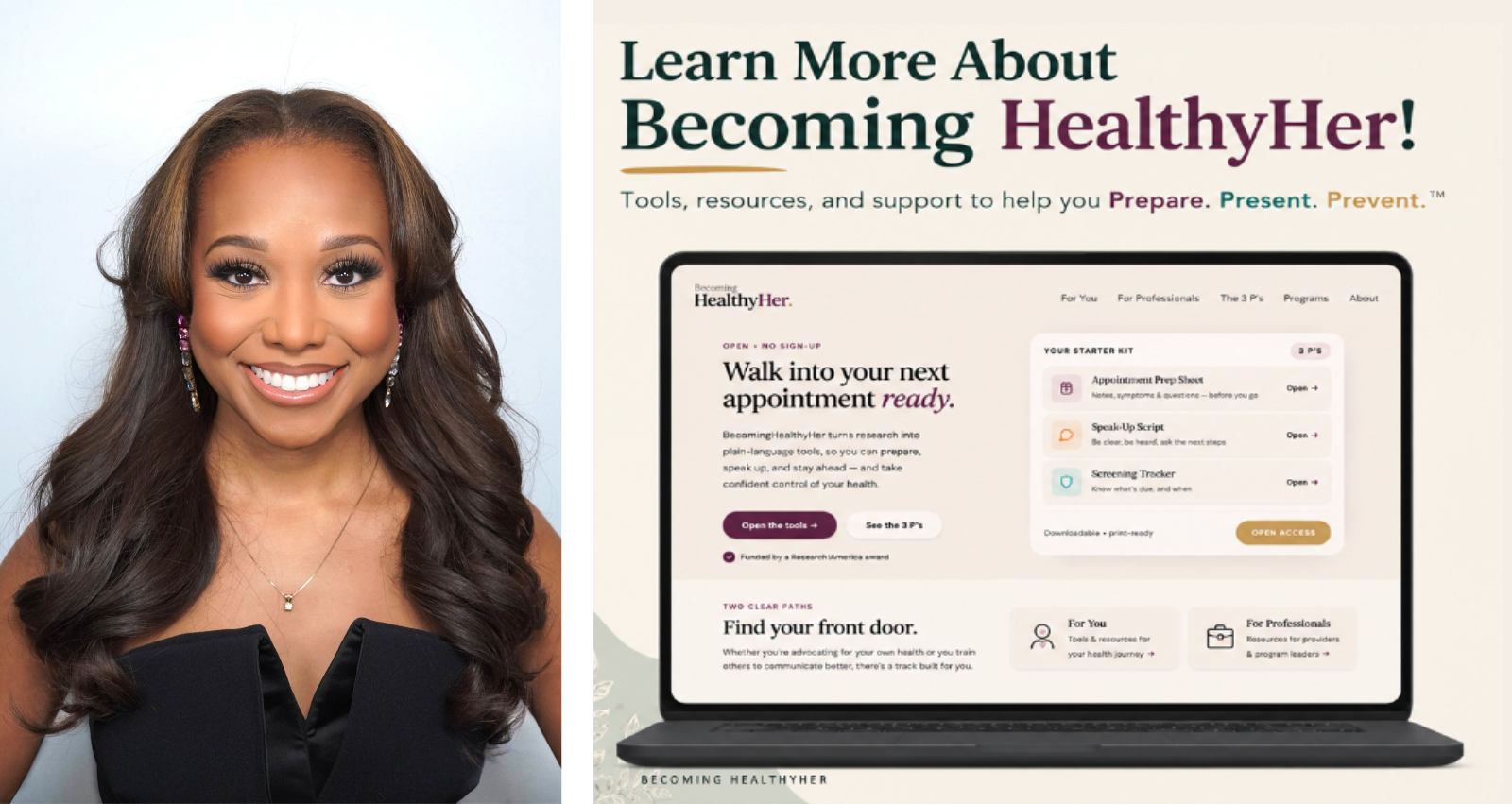
As an author, motivational speaker, and science communicator, Breana Turner, Ph.D., recognizes the importance of sharing her research in an accessible and understandable way. Research!America’s 2025-2026 Public Engagement Content Award gave Breana the opportunity to do that with BecomingHealthyHer, a curriculum and health literacy platform meant to empower women and girls at the doctor’s office.
Breana’s BecomingHealthyHer journey started long before she received a Public Engagement Content Award. When she was a young girl enduring gynecological issues, Breana saw firsthand how the concerns of women, specifically women of color, can be minimized or dismissed by medical professionals. Those negative experiences in the exam room inspired her to be an advocate for women’s health.
While earning her Ph.D. in Translational Biology, Medicine, and Health at Virginia Tech, Breana conducted 18 focus groups – comprised of Black women spanning ages 22 to 89 – for her dissertation: “Sis, Throw Your Cape Away: A Qualitative Study of Black Women’s Lived Experiences and Perceptions of Health and Wellness.” When asked about their experiences in medical spaces, many of the focus group participants gave similar responses: I’m never prepared. I don’t feel comfortable. Doctors don’t listen to me.
For many Black women, this discomfort stems from a history of racism in the medical field – J. Marion Sims’ nonconsensual procedures on enslaved women and researchers’ unauthorized use of Henrietta Lacks’ cells are two examples Breana cites in her dissertation – but the discomfort also stems from a lack of resources that help women take control of their health and well-being. Breana seeks to close this resource gap with BecomingHealthyHer.
“BecomingHealthyHer recognizes the importance of putting the power back into the person, back into the woman,” Breana says. “[It] was incredible to be able to mobilize my research into something tangible that women [can] use.”
Through the BecomingHealthyHer website, Breana provides free, downloadable worksheets that center around what she calls “the 3 P’s:” prepare, present, and prevent. According to Breana, you can best prepare for your medical appointments by tracking your symptoms, reviewing your medical history, and thinking of questions. You can be present in the doctor’s office by explaining your symptoms in detail and contributing to any decision making. Finally, after the appointment, you can fulfill your care plan and get screened regularly to potentially prevent health issues.
Breana also offers video modules and in-person workshops to help women be able to say, “I’m prepared. I feel comfortable. Doctors do listen to me,” at their next appointment. Though BecomingHealthyHer was developed through Breana’s conversations with Black women, these resources can be used by all women.
The primary goal of BecomingHealthyHer is to help women feel seen, heard, and respected in medical spaces. To explain this goal, Breana uses the analogy of a football team.
“One thing I want women to understand is that they’re the quarterback in their care,” Breana explains. “The doctor, the physician, the mental health practitioner is the coach. You can consult with them, but at the end of the day, you know your lived experience, and you know your body better than anybody. If you feel like you need to ‘call an audible’ based on the information that was presented, you should feel empowered to do so. You should feel empowered to make the best decision for yourself.”
Breana remains grateful for her Public Engagement Content Award and the broader Research!America Civic Science community. The program allows non-scientists to interface with important discoveries and interact with researchers in a meaningful way, which is exactly what Breana intends to continue doing with BecomingHealthyHer.
“I don’t want [my findings] to just live in a silo,” Breana says. “It doesn’t do anything if [they’re] only behind a paywall or in publications or at research conferences. Health and science [are] only going to be as relevant as those able to consume the information.”