


Medical Research Week
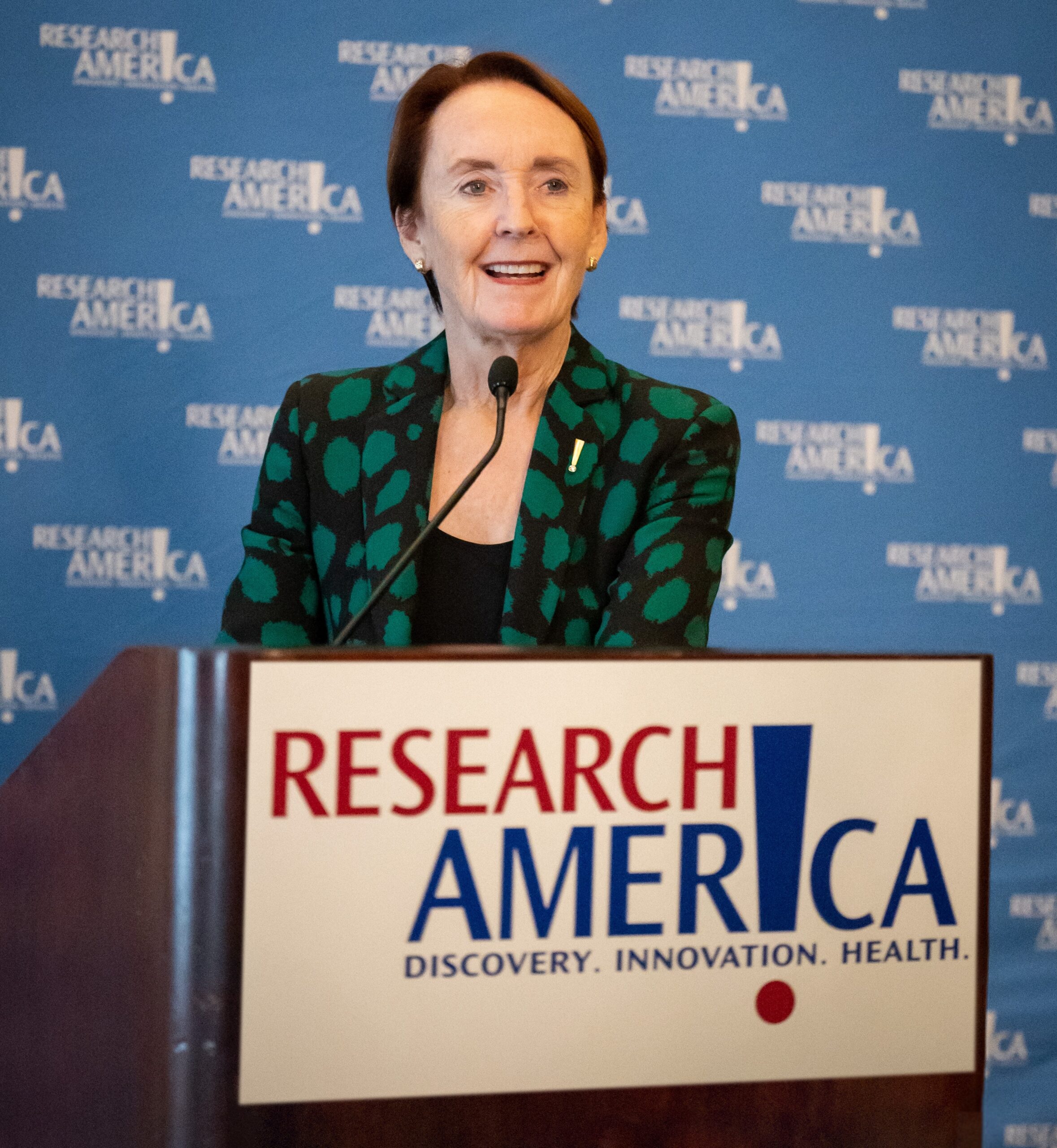
A huge thank you to everyone who joined us yesterday for the 2025 National Health Research Forum’s in-person program at the AAAS in Washington, D.C. We appreciate the participation of NIH Director Jay Bhattacharya, M.D., Ph.D., CBS News Medical Contributor and board member Céline Gounder, M.D., ScM, our terrific panelists, and all those who participated in this meaningful event — in my view, among our best ever. This event and the Washington update and other forum sessions held virtually earlier this month wouldn’t have been possible without the support of our sponsors…thank you!
Yesterday included an early career poster session that featured recipients of our Civic Engagement Microgrant Program and Public Engagement Content Awards. To view select photos from the event, go here. Stay tuned for a video recording of the event if you couldn’t make it yesterday or just want to hear it all again!
On the Hill: With the Sept. 30 end of the current fiscal year less than two weeks away, Republican and Democratic leaders have not agreed on a path forward for FY26 funding. Republican leaders have released a short-term continuing resolution (CR) with minimal policy riders that would flat-fund the government through Nov. 21. Speaker Mike Johnson (R-LA) intends to bring the measure to the House floor Friday and is working to minimize defections in the Republican conference, as they expect the legislation will need to pass the House on a party-line vote. If the House passes the legislation, Senate Majority Leader Thune (R-SD) intends to move swiftly to bring it to the Senate floor.
House and Senate Democrats have signaled that they will not support a CR unless it includes several policy riders, including an extension of expiring enhanced Affordable Care Act premium tax credits created in the American Rescue Plan Act. Democratic leaders introduced their own CR that funds the government through Oct. 31. This CR includes the extension and addresses the threat of a pocket rescission. Timing is particularly tight, as both the House and the Senate are scheduled to be out of session next week, leaving only three in-session days before the fiscal year ends. The stakes are high: the alternative to a CR is a government shutdown.
Medical Research Week! This Monday, Reps. André Carson (D-IN), Brian Fitzpatrick (R-PA), Suzan DelBene (D-WA), Lloyd Smucker (R-PA), and Joyce Beatty (D-OH) introduced H.Res.708, a resolution recognizing the contributions of NIH-supported medical research and designating Sept. 15-19, 2025, as Medical Research Week. (It’s no coincidence that the Rally for Medical Research, our annual National Research Forum, the Golden Goose Awards, and other research advocacy events all took place this week!) Take a moment to thank these bipartisan champions for reinforcing the significance of NIH and the medical progress it spurs. Here’s a sample tweet:
Thank you @RepAndreCarson @RepBrianFitz @RepDelBene @RepSmucker @RepBeatty for your resolution acknowledging medical research week and recognizing the role NIH plays in fighting diseases that harm the American people #researchamerica #MedicalResearchWeek #fundNIH
Beneficial, Bipartisan, Patient-Centric: Inadvertent or otherwise unnecessary delays in coverage for new medical advances reverberate across the ecosystem, reducing the number of patients who benefit from medical progress and skewing interest and support for research regardless of scientific opportunity or medical need. Today, the House Energy and Commerce Committee took a close look at several bipartisan bills, including the Nancy Gardner Sewell Medicare Multi-Cancer Early Detection Screening Coverage Act (H.R. 842) and the Ensuring Patient Access to Critical Breakthrough Products Act of 2025, designed to overcome several such obstacles to coverage for key diagnostics and other medical technologies. Yesterday, the House Ways and Means Committee, which shares jurisdiction over these bills, voted to advance these bills out of Committee, with support from both Republican and Democratic members.
Foreign Research Partnership Guidance: On Sept. 12, NIH released a guidance document describing the process for applying for foreign research partnership grants in light of the transition from the “foreign subawardee” to the “linked grant” system. Since this change was first announced on May 1, Research!America has been part of an informal coalition working to secure as much flexibility and transparency as possible to promote foreign research partnership funding. NIH plans to provide a FAQ document and other resources on this change, and has established an email address for questions.
Americans for Medical Research: To make the case for the vital importance of federal medical and health research, Research!America has convened a coalition of science and clinical societies to launch Americans for Medical Research. As part of this campaign, we are interested in speaking with researchers, patients, caregivers, and clinicians who want to share their stories about why federal investment in medical research matters. We would love to add your voice to the conversation. To share your story or learn more about the campaign, please contact: [email protected].
Support Our Advocacy Work: Capitol Hill’s annual appropriations process has reached a pivotal moment, with research funding threatened. Other variables bearing on medical and public health progress — from the reliability of technology transfer to the investment environment for critical research platforms — are in flux, jeopardizing scientific, technology, and medical progress. Your support is crucial to ensuring that research remains a national priority. Our advocacy is more important than ever. Decisions made in the next few days will shape the future of medical innovation for years to come. Donate now.
Thank you for your support and for all you do to assure better health, quality of life, security, and prosperity.