

‘Tis the Season… to Champion Medical Research
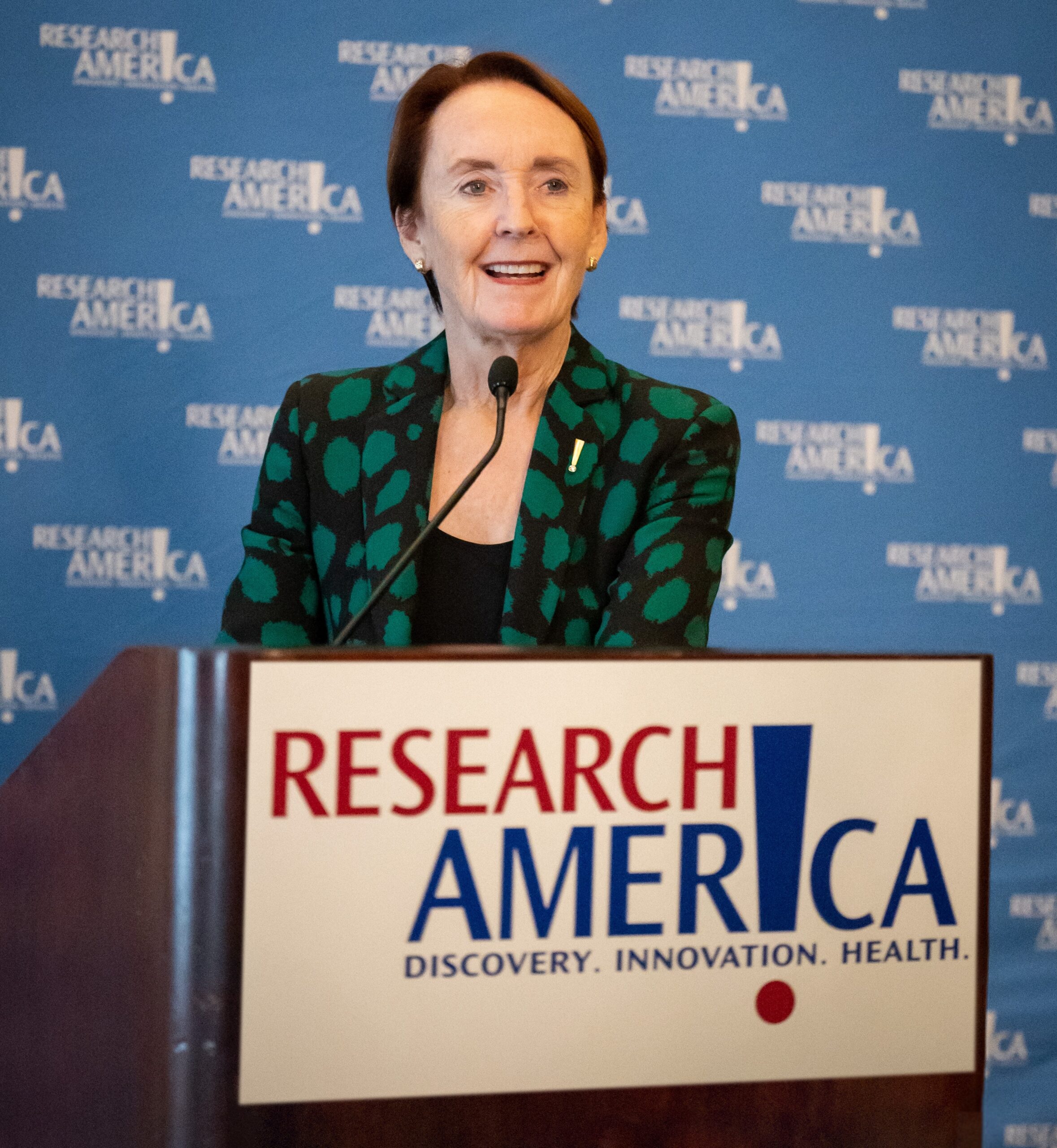
The Research!America team gathered for a winter holiday celebration this week. It was a wonderful time for colleagues to bond over stories, cookies, and games. As gatherings take place across the nation celebrating the holidays, it’s worth noting that Americans are projected to spend a record $1 trillion – a figure that could fund medical and health research-focused agencies at their FY25 levels for more than 13 years.
To be clear, I’m not suggesting we adopt a Scrooge-like perspective on holiday celebrations; instead, these figures help to illustrate the relatively low cost per American that it takes to support medical and health research that will continue to deliver solutions to what ails us. This isn’t the time to shortchange it!
FY26 Appropriations Update: Congress is working on the remaining nine FY26 spending bills, with only five days in session left before they are scheduled to adjourn for the holidays. House Appropriations Chair Tom Cole (R-OK) and Senate Appropriations Chair Susan Collins (R-ME) have reportedly agreed on topline funding levels for some of the remaining bills. Senate Appropriations Vice Chair Patty Murray (D-WA) has noted those figures have not yet been shared with Democrats, just one indicator we are not near the finish line. Funding for the largest measures, Defense and Labor-HHS, remains unsettled with no agreed-upon toplines. Despite ongoing efforts to advance these bills, there is clearly a long way to go to find agreement before the current continuing resolution expires on Jan. 30.
We encourage you to reach out to your members of Congress to urge them to pass the federal spending bills for FY26 without further delay. If you need ideas or advice about contacting your lawmakers, we are here to help, including with advocacy tools available on our website here.
For an example of a case to make, check out this letter from the Science and Technology Action Committee (STAC) to leading congressional appropriators urging them to adopt the Senate’s higher funding levels for the National Science Foundation in the FY26 Commerce, Justice, Science (CJS) appropriations bill. The letter notes that cutting federal research investments would accelerate talent loss, damage U.S. competitiveness, and create openings for global competitors to pull ahead in critical technologies.
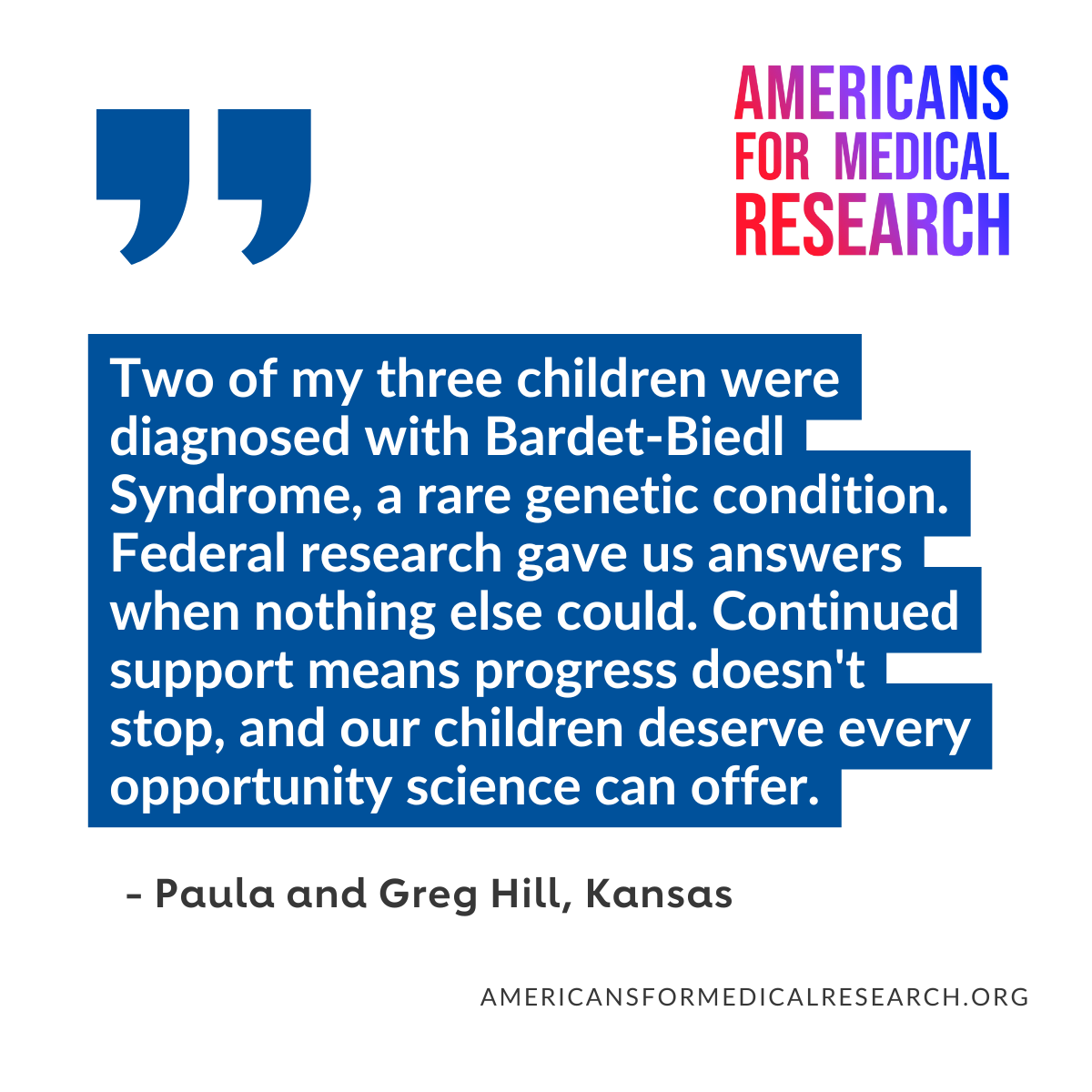 Elevating Voices in Support of Medical Research: The Americans for Medical Research campaign has been featuring stories from Americans across the country about why they support federally funded medical research. As Paula Hill, a parent in Kansas, says: “Two of my three children were diagnosed with Bardet-Biedl Syndrome, a rare genetic condition. Federal research gave us answers when nothing else could. Continued support means progress doesn’t stop, and our children deserve every opportunity science can offer.” (You can read more quotes and stories on the campaign website here.) Thanks to medical research, groundbreaking treatments and discoveries have saved lives and improved people’s quality of life. Americans are counting on continued progress for a healthier future.
Genesis Explained: We recently highlighted the Genesis Mission, the new AI initiative established by the administration. This AIP article describes the challenges the mission will focus on, including “advancing discovery science” and “ensuring national security.” The article describes the U.S. Department of Energy’s (DOE) task to identify “at least 20 science and technology challenges in the areas of advanced manufacturing, biotechnology, and critical materials,” among others, that may be addressed by the mission.
Additionally, the article links to a Science editorial co-authored by DOE Undersecretary for Science (and former STAC Committee and Research!America board member) Darío Gil, who is leading the initiative. Secretary Gil also sent a letter to DOE and National Laboratories community members describing the Genesis Mission as a national initiative that unites the DOE labs, industry, and academia to accelerate breakthroughs in AI, quantum computing, and high-performance computing.
The Changing Landscape for Science: On Tuesday, Dec. 16, at noon ET, we will host a Research!America alliance member-only discussion featuring Joshua Weitz, Ph.D., Professor of Biology and Clark Leadership Chair in Data Analytics at the University of Maryland. He is the co-founder of the Science and Community Impacts Mapping Project, a tool that visualizes local impacts of federally funded research, helping communities, advocates, and policymakers assess what’s at stake and how to best target their advocacy. Dr. Weitz will address the ongoing, collaborative efforts by researchers to confront threats to science and foster a renewed commitment to federal investment in basic and translational research. As always, we’ll provide a Washington update and leave plenty of time for questions. Email Jacqueline Lagoy to register.
Health Services Research: An undervalued and underutilized area of research, Health Services Research (HSR) focuses on how health care is organized, financed, delivered, and accessed. It is critical to ensuring medical progress improves the quality of care for patients by transforming health care delivery to achieve the accessible, effective care that American patients need. Given that both the cost of health care and access to it are among the most important health issues Americans say are facing the nation, HSR is a very timely topic. Join us on Wednesday, Jan. 21, 2026, from noon to 1:30 p.m. ET for a briefing on Capitol Hill focused on recent developments in health services research. (Lunch will be provided.) Learn more about this event and register here.
Support Research Advocacy: Strong advocacy is essential as we enter a pivotal year for research and innovation. Your voice helps ensure that discovery, innovation and evidence-based policy remain national priorities. And your year-end gift empowers Research!America to elevate the importance of scientific, medical, and health research, mobilize advocates, and meet the challenges ahead in 2026. Join us in protecting the future of scientific progress. Donate now.