

National Survey Shows Americans Want Congress to Invest More in Science and Technology

Survey Shows Americans Concerned about Disruptions to Research
Arlington, Va. – A Research!America-commissioned survey released today reveals that nearly 7 in 10 Americans across the political spectrum say Congress should invest more taxpayer dollars to advance science and technology. Further, Americans say medical progress should be among the top three of our nation’s priorities over the next 50 years.
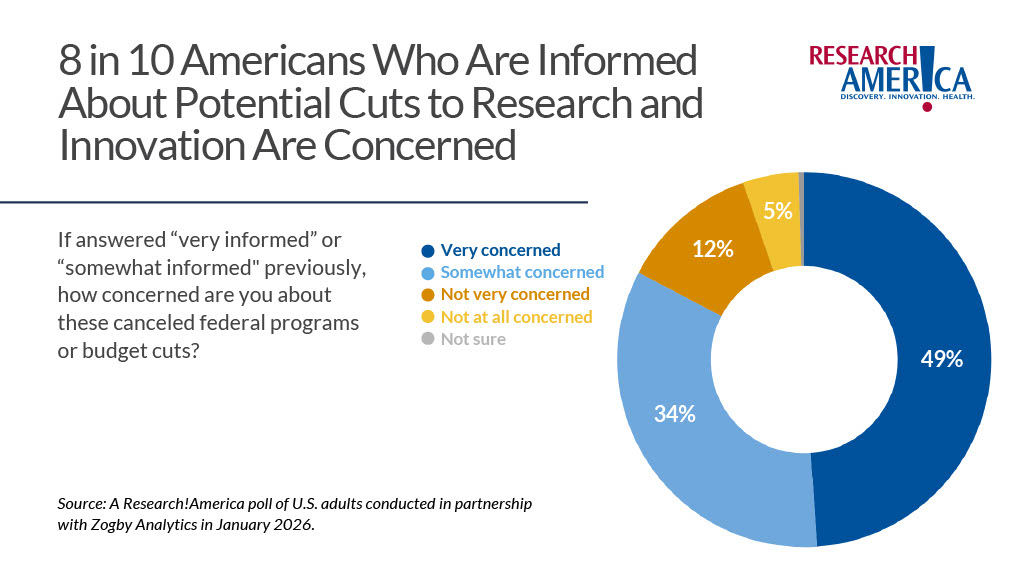
In addition, 92% of Americans across the political spectrum support basic scientific research, an increase of seven points over last year’s survey. Despite this popular support, the past year has been challenging for U.S. science and research that benefits patients. Half (51%) of Americans say they are informed about canceled federal programs or budget cuts that could impact science, research, and innovation. Of those respondents who said they are informed, 83% say they are concerned about the disruptions to research.
Notable Findings to Inform a Midterm Election Year
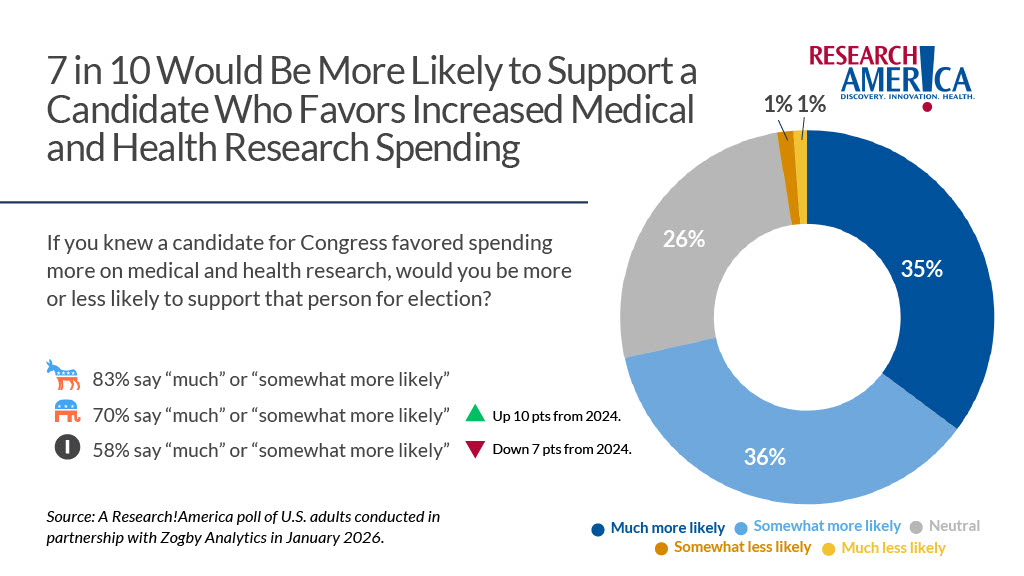
Nearly 9 in 10 Americans across the political spectrum say it is important for candidates to champion faster medical progress, and 7 in 10 (including 70% of Republicans, a 10-point increase over 2024) say they would be more likely to support a candidate who favors increased spending on medical and health research.
“These survey findings offer valuable insights as the U.S. marks its 250th birthday,” said Research!America President and CEO Mary Woolley. “Even as we reflect on our nation’s storied global leadership in science, technology, and medical progress, our nation must find our way back to a fast-forward approach. We should set our sights high for scientific, medical, and public health progress, then work to exceed expectation. The American public has spoken, and we urge the president and Congress to listen and lead the way with robust investments in research.”
Issues of Increasing Concern to Americans
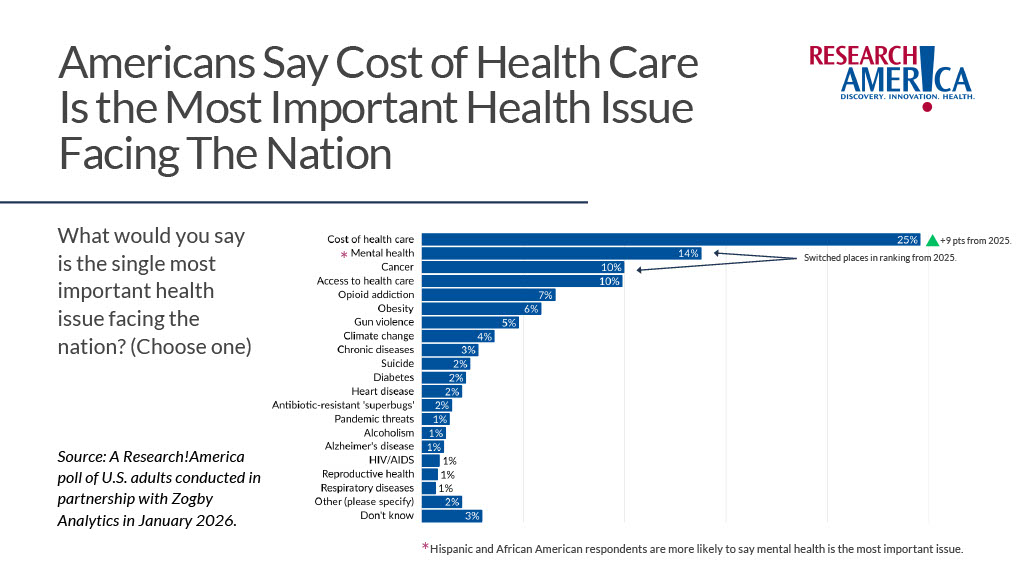
A quarter of respondents across the political spectrum identified the cost of health care as a critical health issue facing the nation, up nine points from 2025 and still ranking as the No. 1 health issue. Mental health was identified as Americans’ second most important health issue, with African American and Hispanic respondents more likely to view mental health as the top health issue in the U.S.
Confidence and Trust in Health Care Professionals and Scientists
An overwhelming majority (83%) of Americans say they have a great deal or a fair amount of confidence in scientists, an increase of five points over last year. This level of confidence in scientists is the highest it has been since . Additionally, 7 in 10 Americans think the work of scientists benefits all or most people in the U.S., a 10-point increase over last year’s survey findings.
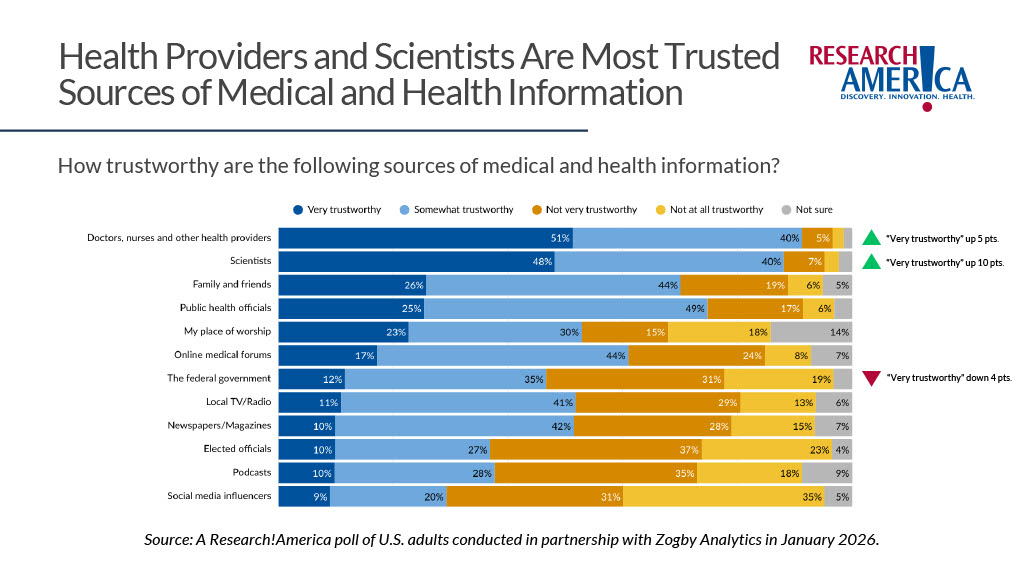
In terms of trustworthy sources of medical and health information, 91% of Americans say they trust doctors, nurses, and other health providers, and 88% say they trust scientists.
Visibility of Science and Research
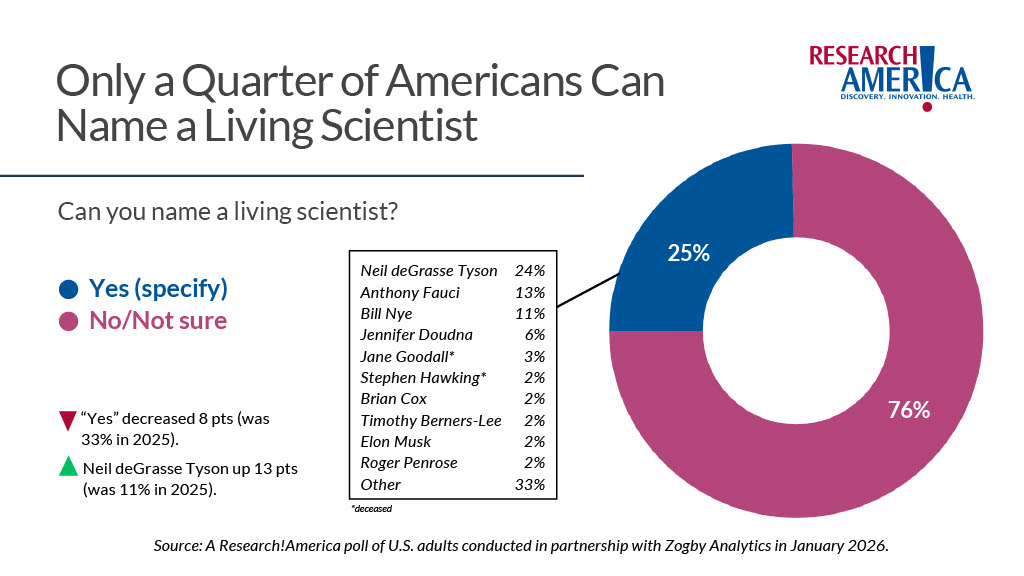
Just over half (53%) of Americans can name a medical or health research institution, and only half are aware that science and technology research is conducted in every state. A similar percentage (48%) are aware that medical or health research is conducted in every state. Only a quarter of Americans can name a living scientist, down from one-third last year.
Other Notable Survey Findings:
- An increasing majority (60%) of respondents between the ages of 18 to 24 say they view artificial intelligence (AI) more as a risk than a potential improvement in their lives, up nine points from last year.
- Further, among all respondents, nearly half (49%) say they view AI more as a risk. This percentage has been growing since 2020, when 33% said they view AI as a risk.
- Nearly 8 in 10 Americans are confident in the safety of vaccines used today, a four-point increase over last year.
- 45% of Americans say they worry that not all the childhood vaccines are necessary, a four-point decrease from last year’s findings.
The online survey was conducted by Zogby Analytics on behalf of Research!America in early January 2026, among 1,007 adults plus additional adults for minority oversampling. The survey has a theoretical sampling error of +/- 3.1 percentage points. The sample is weighted to best represent the demographics of the population being surveyed. Weighted variables may include age, race, gender, and political party. Contact Glenn O’Neal, Senior Director of Communications, at 571-482-2737 or [email protected] with press inquiries.
For more than 30 years, Research!America has commissioned public opinion surveys to help understand Americans’ views on medical, health, and scientific research and other pressing issues related to public health, research, and innovation. For a snapshot of the findings, go here, and for the full 2026 survey, please visit the Research!America survey page here.