

Increasing the Visibility of Science
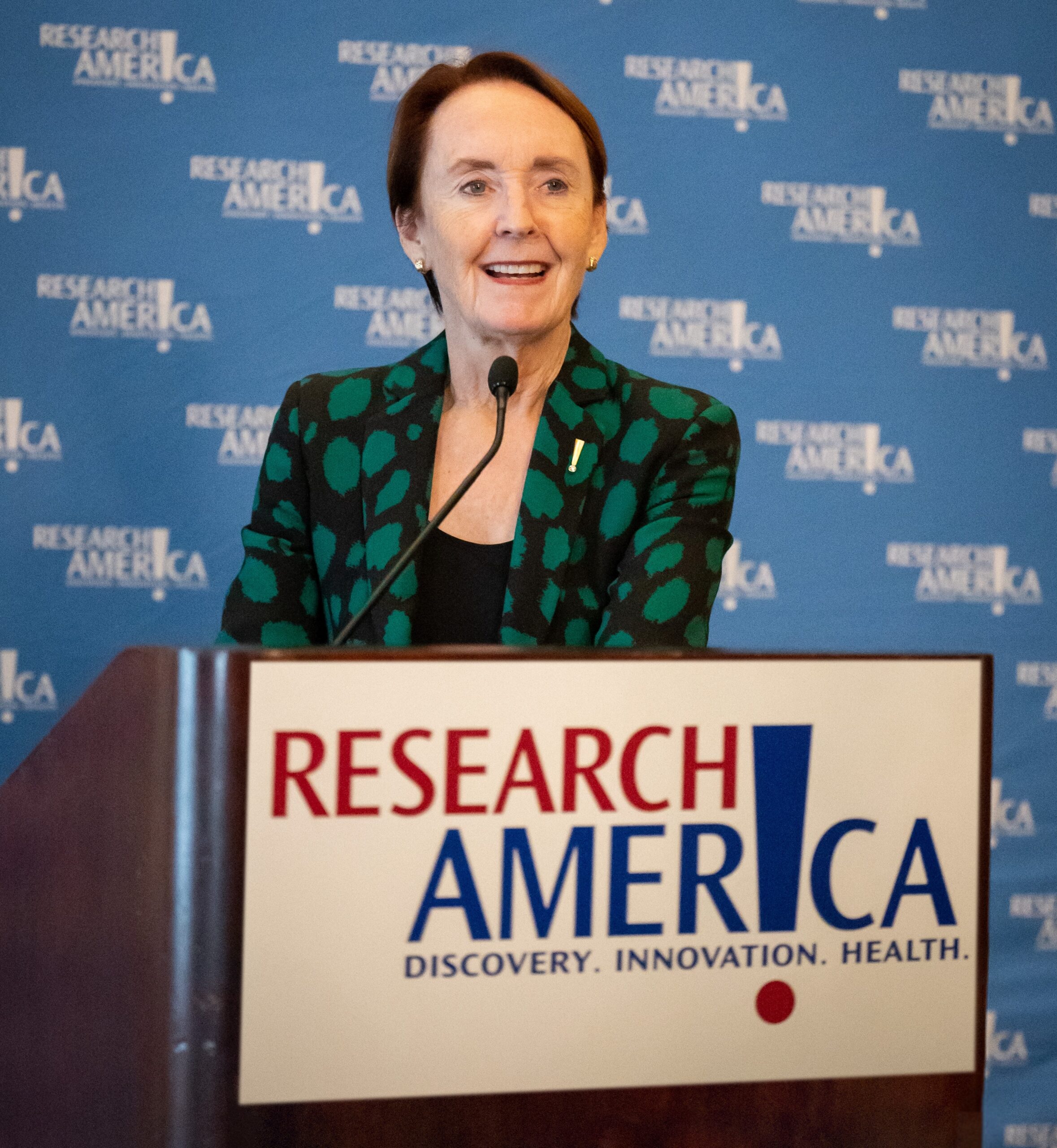
It may be surprising to some that only about one-third of Americans can name a living scientist, and only about half can name an institution, company, or organization where medical or health research is conducted. This awareness gap makes it all too easy for policymakers and the public to dismiss or distrust science.
The public opinion surveys we commission also show that a majority (about 85%) of Americans believe scientists should consider it part of their job to inform the public about their research and its impact on society. A survey released today from the Pew Research Center found that about half of Americans (51%) say health scientists don’t have enough influence on public debates about health policy. Take a look at Pew’s other survey findings here.
One takeaway from the survey data above is the importance of scientists’ public engagement. The Coalition for Trust in Health and Science has a helpful resource and checklist for communicating effectively and building trust in science.
On (and off) the Hill: On July 4, President Trump signed H.R. 1, often referred to as the One Big Beautiful Bill Act, into law. In a law that in other respects is controversial (to put it mildly) it is important to be aware of two research-related provisions that have enjoyed bipartisan support. The first allows immediate expensing under the R&D tax credit. The second codifies the ORPHAN Cures Act, which addresses an anomaly in the Inflation Reduction Act that inadvertently disincentivizes important avenues of rare disease research.
In the House, appropriations markups originally planned for the week of July 7, including the Commerce, Justice, Science bill, have been postponed due to a recent change to the House calendar. While the Labor-HHS Subcommittee markup had been tentatively scheduled for later this month, that timeline could extend to the fall. We’ll pass along confirmed dates as soon as they’re available.
In the Senate, appropriators began their first round of markups today, taking up the FY26 Agriculture-FDA and Commerce-Justice-Science (CJS) bills. The committee unanimously approved its FY26 Agriculture-FDA bill, which includes $3.5 billion in discretionary funding for the FDA, part of a $7 billion total when including user fees. Overall, this is a 4% increase for the FDA over FY25 funding, and a nearly 4% increase over the president’s FY26 budget request.
The committee did not succeed in passing the CJS bill due to differences on an issue unrelated to NSF funding. While not yet public, the CJS bill text reportedly recommends an NSF funding level that is less than 1% lower than FY25 funding. That’s a vast improvement over the 58% reduction proposed in the president’s FY26 budget proposal.
Despite the Committee’s difficulties in approving the CJS bill, it’s heartening to see progress for research funding. Advocacy works!
Speaking of Advocacy… As you know, the president’s budget request recommends cutting NIH funding by nearly 40% in FY26, despite overwhelming public support for faster medical progress across the political spectrum. Advocacy is needed! Use this editable email to press for robust NIH funding.
In the News: The New York Times published an article today (subscription required) about the administration’s proposed budget cuts to basic scientific research. The story includes Research!America’s reaction to deep cuts, which would make the American public less safe, poorer, and sicker.
CDC Nomination Update: The Senate HELP Committee held an executive session this week and approved the nomination of Dr. Susan Monarez to serve as Director of the Centers for Disease Control and Prevention. The next step is for the full Senate to consider the nomination.
STAC on Capitol Hill: On Wednesday, July 23, the Science and Technology Action Committee (STAC) will host a reception on Capitol Hill to discuss the importance of a strong U.S. science and technology (S&T) enterprise. STAC members, alongside invited national and local leaders, will come together to emphasize the importance of a robust S&T enterprise for U.S. economic and national security. RSVP here.
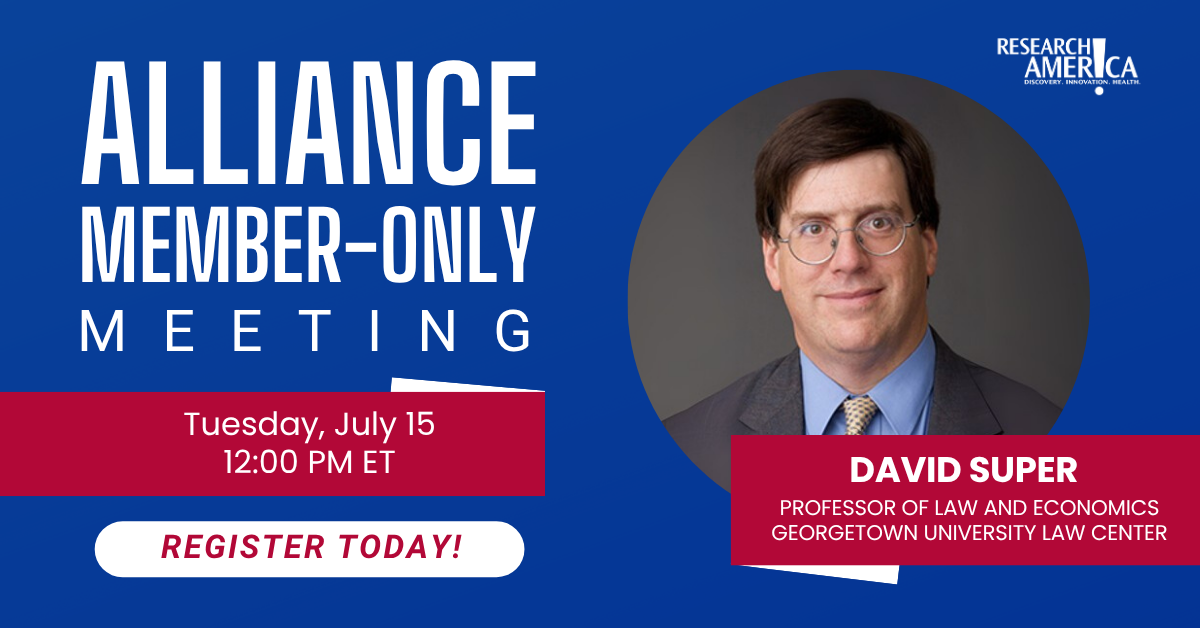
Back by Popular Demand: Two fan-favorite speakers are joining Research!America alliance member-only meetings this month.
On Tuesday, July 15, at noon ET join us for a conversation with David Super of Georgetown University. We’ve asked David to shed light on the nature, scope, and status of key, research-relevant lawsuits.
Join us on Tuesday, July 22, at noon ET for a conversation with Cheryl Jaeger of Crossroads Strategies about the current policy and funding landscape.

We’ll also provide an update on a major communications and advocacy campaign launching this month. If you are with a Research!America alliance member organization, email Jacqueline Lagoy to register for these meetings.
Nominate A Champion: Who will be our 2026 Research!America Advocacy Awardees? The Advocacy Awards recognize individuals and organizations whose commitment to advocacy for research and innovation has advanced medical, public health, and scientific progress in profoundly important ways. Take a look at the award descriptions and submit your nominations now. The deadline is Thursday, July 31, so don’t delay!